The Best Pocket Trumpet
You Can Buy in 2026
A no-nonsense buyer’s guide from a brass educator with 20+ years of teaching and performing experience — covering every budget, skill level, and use case.
Top Picks at a Glance
If you’re in a hurry, here are the winners. The full reasoning is below — and trust me, it’s worth reading before you spend your money.
Let Me Be Honest With You First
I’ve had more students come to me frustrated after wasting money on the wrong pocket trumpet than I’d like to admit. They saw a shiny brass instrument online, noticed the low price tag, and clicked “buy” before reading anything beyond the headline. A few weeks later, they’re in my studio with a horn that won’t stay in tune, valves that stick after ten minutes of playing, and a serious case of buyer’s remorse.
So before we dive into any specific model, I want to give you the kind of advice a band teacher would give their own kid: pocket trumpets are genuinely wonderful instruments — but the market is absolutely flooded with cheap junk that will frustrate you and potentially hurt your development as a player. The gap in quality between a $60 knock-off and a $400 mid-range horn is enormous. And the gap between a $400 mid-range and a $900 professional model is real but more nuanced.
This guide is going to walk you through everything. What a pocket trumpet actually is and isn’t. How to evaluate one before buying. Which brands can be trusted and which should be avoided. And a detailed look at the best models available right now in 2026, from budget to boutique. By the end, you’ll know exactly which instrument is right for you — and more importantly, why.
Let’s get into it.
What Is a Pocket Trumpet, Really?
I get asked this all the time, and the confusion is completely understandable. Here’s the simple version: a pocket trumpet is a standard Bb trumpet with the tubing coiled more tightly. That’s it. The tubing length is identical to a regular trumpet — approximately 148 centimeters — which means it plays in the exact same key, hits the same notes, and uses the same fingerings. What changes is the shape, not the physics.
Because the tubing is coiled into a more compact configuration, the instrument ends up roughly half the length of a standard trumpet. This makes it dramatically more portable — it fits easily in a backpack, carry-on luggage, or even a large jacket pocket in some cases.
What doesn’t change: your mouthpiece. A standard trumpet mouthpiece works on virtually every pocket trumpet (the receiver is the same). This is good news if you already own a trumpet and have a mouthpiece you love.
One of the most common misconceptions I encounter is students thinking a pocket trumpet is a “beginner” version of the trumpet, like a toy. It isn’t. Professional players use pocket trumpets for specific artistic and practical reasons. They have a distinct tonal character — tighter, slightly more focused — and some players genuinely prefer that sound in certain musical contexts.
Does It Sound Different From a Standard Trumpet?
Yes, and this is important to understand. The tighter coiling of the tubing creates more back-pressure and a slightly more focused, compressed tone quality. On a good pocket trumpet, this translates to a warm, sweet sound with a bit more “directness” than a standard Bb trumpet. On a bad one, it sounds stuffy, restricted, and difficult to project.
The bell diameter plays a huge role here. Models with smaller bells (common on cheap imports) produce a thin, pinched tone that will make any experienced player cringe. Models with larger “big bell” designs — like the CarolBrass CPT-3000 series — come much closer to the open, singing quality of a full-size trumpet. This is one of the most important specifications to check when comparing models.
Who Should Consider a Pocket Trumpet?
I’d recommend a pocket trumpet to four main groups of players:
- Frequent travelers — musicians who fly regularly and don’t want to gate-check their horn or pay for an extra seat. A pocket trumpet fits in any overhead bin.
- Doublers and multi-instrumentalists — players who already own a standard trumpet and want a compact option for rehearsals, sessions, or specific gigs where the sound or portability is an asset.
- Young beginners in small spaces — kids or apartment-dwellers who find the full-size instrument unwieldy. That said, only if they’re buying a quality model (more on this below).
- Casual players and adult learners — people who want to pick up the trumpet without a large instrument taking over their living space.
2026 Pocket Trumpet Comparison Table
Here’s a detailed look at how the top models stack up. I’ve included bell diameter because it’s one of the most overlooked specs — and one of the most important for sound and mute compatibility.
| Model | Level | Bell Ø | Bore | Valves | Weight | Case | Est. Price | Rating |
|---|---|---|---|---|---|---|---|---|
| CarolBrass CPT-3000-GLS Top Pick | Intermediate+ | 4.7″ | .460″ | Monel | 2.1 lbs | Hard case | $420–$480 | |
| Kanstul CCT 905 | Professional | 4.8″ | .462″ | Monel | 2.2 lbs | Hard case | $850–$1,100 | |
| Austin Custom Brass (ACB) Doubler | Professional | 4.6″ | .460″ | Monel | 2.0 lbs | Gig bag | $700–$900 | |
| Jean Paul USA PT-350 | Beginner–Mid | 4.3″ | .460″ | Stainless | 1.9 lbs | Gig bag | $160–$200 | |
| pTrumpet (Plastic) | Beginner | 4.0″ | .450″ | Plastic | 1.1 lbs | Bag | $130–$160 | |
| Mendini MPT-N | Beginner | 3.9″ | .453″ | Stainless | 1.8 lbs | Case | $60–$90 |
Prices are approximate as of April 2026. Always verify current availability from authorized dealers.
The Best Pocket Trumpets — Reviewed in Depth
I’ve played or evaluated every model on this list. What follows is my honest assessment of each one — what it does well, where it falls short, and who it’s actually right for.
If I had to recommend one pocket trumpet to virtually any player at any level above complete beginner, this would be it. The CarolBrass CPT-3000-GLS has been sitting at the top of the pocket trumpet market for several years now, and in 2026, it still hasn’t been meaningfully dethroned at its price point.
The first thing you’ll notice when you pick this horn up is that it feels serious. The build quality is immediately apparent — tight tolerances, smooth valve action, and a finish that holds up. But the real story is that big bell. At 4.7 inches in diameter, it’s dramatically larger than most pocket trumpets, and the acoustic difference is not subtle. You get warmth, projection, and an openness in the upper register that cheaper pocket trumpets simply cannot replicate. I’ve had professional players in my studio genuinely impressed by the tone coming out of this instrument.

The intonation is where most pocket trumpets let you down — and where the CarolBrass consistently surprises. Even across temperature changes (which affect intonation more dramatically in tight-wrapped instruments), the CPT-3000 stays remarkably stable. The main tuning slide moves smoothly, and the third valve slide has enough range to address the predictable tendencies in the upper register.
One real-world tip: this horn does respond a bit differently from a standard trumpet because of the tighter coiling, so expect a short adjustment period of a week or two. Players who come from a flugelhorn background actually tend to adapt faster, since the back-pressure profile is somewhat similar. For players transitioning from a standard trumpet, just be patient — the air support and resistance feel slightly different, but your technique will carry over.
- Exceptional intonation for a pocket trumpet
- Big bell produces full, warm tone
- Standard mutes fit (unlike most pocket trumpets)
- Monel valves — fast, durable, reliable
- Pro-level build quality at a mid-range price
- Adjustment period from standard trumpet
- Not the most portable case design
- Slightly harder to find from local dealers
Kanstul is a name that commands serious respect in the brass world. Based in California, they built their reputation making instruments for professional orchestral and studio players, and the CCT 905 represents what that pedigree looks like applied to the pocket trumpet format.
The difference between the Kanstul and even the excellent CarolBrass is most apparent in nuance. The valve action is hand-fitted to a degree you don’t find on mass-produced instruments — the tolerances are extraordinarily tight, which means faster response, better slotting, and a more consistent feel across the entire range of the instrument. Experienced players will feel this difference almost immediately. The tone is more complex, with an overtone richness that lets the instrument “speak” expressively in a way that cheaper horns simply can’t do.
For a studio musician or touring professional who genuinely needs a compact instrument for specific applications, the Kanstul justifies its premium price. I’ve seen it used on recording sessions where the producer specifically requested the tighter, more “intimate” sound character of a pocket trumpet — and the Kanstul delivered that sound while still being responsive and in tune.
The honest caveat: this instrument is overkill for a beginner or even most intermediate players. You won’t be able to take full advantage of what it offers until your technique and ears are developed enough to hear and feel the differences. If you’re not already a proficient trumpet player, buy the CarolBrass and invest the remaining $400 in lessons.
- Elite American craftsmanship
- Hand-fitted valves — best action available
- Studio and performance grade intonation
- Extraordinary tonal depth and complexity
- Resale value holds extremely well
- Price puts it out of reach for most
- Availability can be limited
- Benefits only accessible to advanced players
Austin Custom Brass occupies a fascinating niche in the brass instrument market. They’re a specialist operation with deep connections to boutique manufacturers, and their pocket trumpet offerings — often sourced through relationships with top-tier workshop-level builders — represent an interesting alternative to the better-known Kanstul. The ACB Doubler model specifically is designed with the working musician in mind: someone who owns multiple instruments and needs their pocket trumpet to be genuinely gig-worthy.
What sets ACB apart is the level of customization available. Unlike buying a standard production model, ACB will work with you on finish options, bell configurations, and even bore specifications if you’re ordering a bespoke instrument. Their Manchester Brass connections give them access to some exceptional European workshop-built horns that very rarely show up in mainstream retail channels.
I should note that ACB models are harder to evaluate as a single review because there’s variability in what they sell — they’re a distributor and customizer, not a single-model manufacturer. The baseline quality is high across all their pocket trumpet offerings, but the experience of buying from them is more like working with a specialist dealer than clicking “add to cart.” If you’re in this tier of buyer, that’s probably exactly what you want.
- Customization options unavailable elsewhere
- Access to boutique European builds
- Expert consultation from specialists
- Performance-grade across the lineup
- Less standardized buying experience
- Lead times can be longer for custom orders
- Premium pricing for top-tier builds
Let me be upfront: I have reservations about recommending budget brass instruments in general, because the floor of quality at this price point can be really low. But Jean Paul USA has earned a place on this list by consistently standing out from the crowd of indistinguishable Chinese-import pocket trumpets that dominate the sub-$200 market.
The PT-350 is not a professional instrument. Nobody is going to mistake it for a CarolBrass or Kanstul. But within its category, it does several things right. The valves — stainless rather than monel — are acceptable for a student instrument and don’t tend to stick the way the worst budget models do. The intonation is workable for a beginner who is still developing their ear. And crucially, Jean Paul has a much better quality control track record than most of its competition. When you buy from a company like Mendini or some of the anonymous Amazon brands, the variance between individual units can be enormous — one horn is fine, the next one has a stuck third valve slide and a finish that starts flaking after six months. Jean Paul is more consistent.
For a parent buying a first instrument for a child who wants to try the trumpet, or for an adult who wants to explore the instrument before committing to a proper investment, the PT-350 makes sense. But here’s my honest advice: if you can stretch your budget to $300–$350, you’re in CarolBrass territory on the used market, and that jump in quality is transformative.
Before buying any budget pocket trumpet, check that the valve caps unscrew smoothly and the slides pull out and push back in without excessive force. These are the two most common issues on cheap instruments, and either problem is a dealbreaker for a student.
- Best quality control in the budget segment
- Acceptable intonation for beginners
- Reliable enough for regular practice
- Good starter kit package (mouthpiece, case)
- Noticeably limited tone quality vs. mid-range
- Stainless valves less refined than monel
- Will feel limiting as skills develop
The pTrumpet is genuinely unlike anything else on this list, and I mean that in the best possible way for a specific type of buyer. This instrument is made almost entirely of plastic — rotor valves, body, bell, all of it — and it is essentially indestructible under normal use. Drop it on concrete? It bounces. Forget it on the back of a bus? It’s still playable. Let a seven-year-old carry it in a backpack? Fine.
For young children who are just beginning to explore music, or for school programs where instruments inevitably take a beating, the pTrumpet is a genuinely smart choice. The plastic rotor valves are surprisingly reliable, and the instrument is properly in tune — not perfect, but workable. At just over a pound in weight, even small children can hold it without fatigue.
Here’s the important caveat, though, and I want to be clear about this: the pTrumpet is a learning and exploration tool, not a development instrument. It plays slightly differently from a brass trumpet — the plastic absorbs vibration in a way that changes the feel and subtly affects embouchure development. I would not recommend keeping a serious student on a pTrumpet for more than a year. Once they’ve established interest and basic technique, they need to transition to a proper brass instrument to continue developing properly.
Think of it the way you’d think of a foam bat for tee-ball: great for getting started, but not what you’d hand to a kid with real talent who’s ready to progress.
- Virtually indestructible
- Incredibly lightweight (ideal for young kids)
- Great for exploratory beginners
- Low cost with no regrets if abandoned
- Plastic valves less refined than metal
- Tone quality is limited
- Not suitable for serious development beyond basics
The Major Brands Compared — An Honest Assessment
One of the first things I tell my students when they’re researching instruments is to spend as much time understanding the brands as the specific models. In the pocket trumpet world, the brand landscape is quite different from standard trumpets — and there are some surprising absences among names you’d expect to see.
I get asked about Yamaha constantly, because they make exceptional standard trumpets at every price point. Here’s the honest answer: in 2026, Yamaha is not a meaningful player in the dedicated pocket trumpet market. They produce the YTR-2330 compact/student instrument, but it’s not a true pocket trumpet in the traditional sense. For standard trumpets? Yamaha is incredible. For pocket trumpets specifically? CarolBrass dominates this niche, and Yamaha simply hasn’t challenged that.
The Complete Pocket Trumpet Buyer’s Guide
If you’re going to spend real money on an instrument, you should understand exactly what you’re evaluating. Here are the factors I walk every student through when they’re shopping for a pocket trumpet — in order of importance.
-
1Intonation — The Non-Negotiable
The ability to play in tune is the single most important characteristic of any instrument. Cheap pocket trumpets frequently have intonation problems built into the design — notes that cannot be corrected no matter how skilled the player. A $70 trumpet that plays sharp on middle G or flat on C in the staff is not an instrument; it’s an expensive toy. Before any other consideration, research whether a model has documented intonation issues. Reviews from actual trumpet players (not Amazon reviewers who gave something 5 stars because it “looks pretty”) are your best resource here.
-
2Bell Diameter — Massively Underappreciated
This is the specification most casual buyers completely overlook, and it may be the most sonically important. A bell diameter under 4.1 inches will produce a thin, restricted sound that limits your expression and projection. The CarolBrass “Big Bell” at 4.7 inches produces a significantly fuller, warmer sound that approaches the character of a standard trumpet. If you care at all about tone quality — and you should — bell diameter should be near the top of your checklist. It also affects mute compatibility: standard trumpet mutes will not fit small-bell pocket trumpets.
-
3Valve Quality and Action
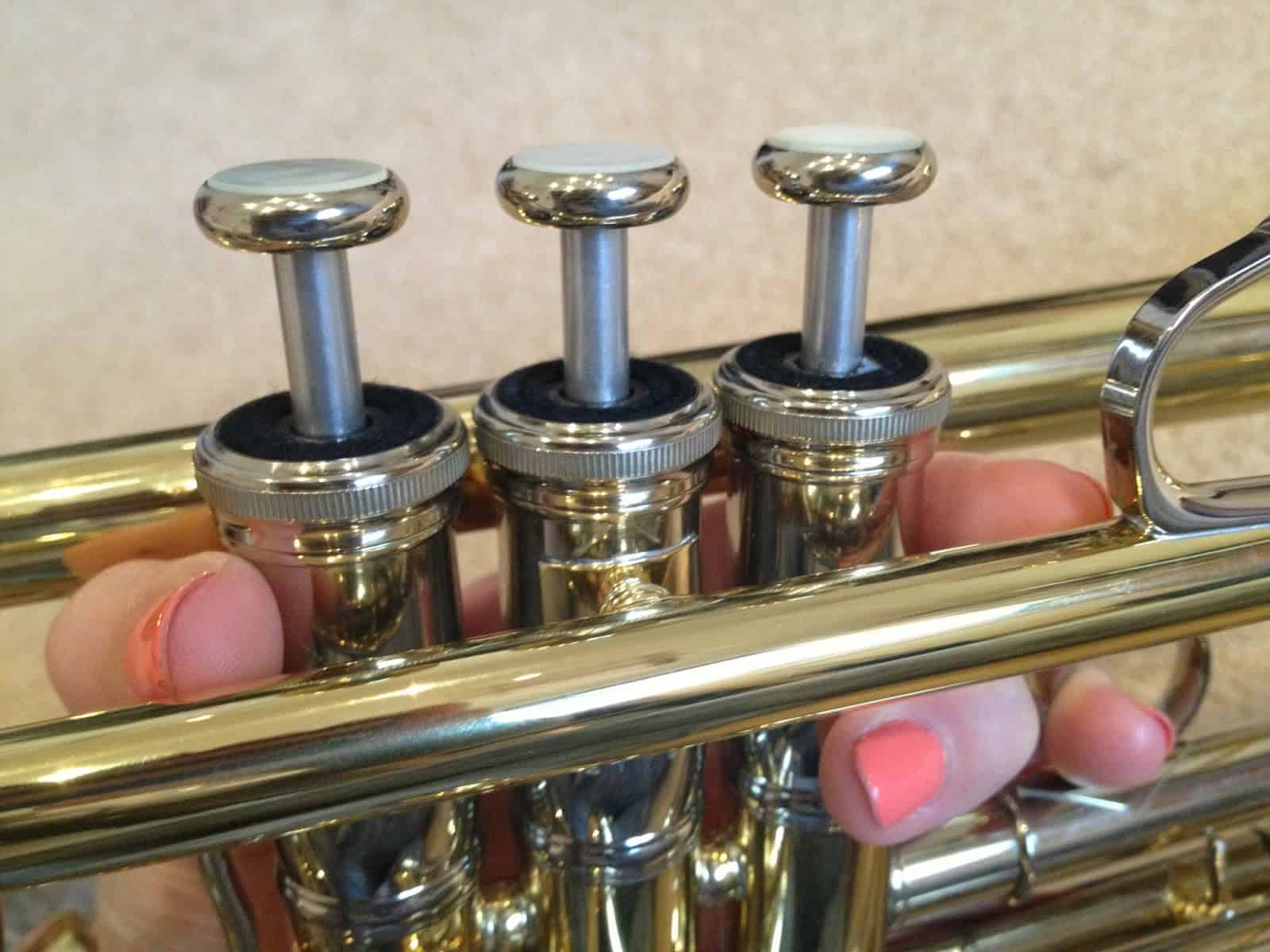
Your valves are the mechanical heart of the instrument. Monel valves are the industry standard for quality — they’re corrosion-resistant, durable, and machine to tighter tolerances than stainless. Stainless valves are acceptable at the student level. Cheap alloy or unspecified metal valves are a red flag. Before buying, if possible, play the instrument and test the valve action — they should move smoothly and return quickly with no lateral wobble. Any sticking, grinding, or looseness is a dealbreaker.
-
4Bore Size and Back-Pressure
Bore size affects the resistance you feel when blowing. A smaller bore (around .450″) creates more back-pressure — some players love this, finding it easier to control; others find it restrictive. A larger bore (.460″–.462″) feels more open and responsive, closer to a standard trumpet. Most serious pocket trumpets sit in the .460″ range. Beginners should generally avoid instruments with extreme resistance, as it can make development harder.
-
5Build Quality and Finish
Don’t be seduced by gold plating. A gold-lacquer finish on a poorly-built instrument is like a designer suit on a bad foundation — it looks good in the photo and disappoints the moment you engage with it. Look at the quality of the solder joints (they should be smooth, not blobby), the thickness of the brass tubing (heavier is generally better), and the quality of the water keys. Amado water keys (the ball-type that you push sideways) are generally superior to standard pin-type keys on a pocket trumpet because of the design geometry.
-
6Case and Portability Accessories
One of the primary reasons to buy a pocket trumpet is portability, so don’t overlook what it comes with. A hard case offers better protection; a gig bag is lighter and easier to carry. Make sure the case has a secure mouthpiece pouch and valve oil compartment. For frequent travelers, check external case dimensions against carry-on restrictions for your most-used airline.
A Note on Mute Compatibility
This comes up constantly and deserves special attention. The vast majority of pocket trumpets — especially the cheap ones — do not accept standard trumpet mutes. Standard straight mutes, cup mutes, and Harmon mutes are designed for a bell diameter of approximately 4.8 to 5.0 inches. Most pocket trumpet bells are smaller than this, meaning the mute simply won’t seat properly.
If mute use is important to you — for practice, recording, or performance — you need to specifically look for pocket trumpets with larger bell diameters, or purchase mutes specifically designed for smaller-bell instruments. The CarolBrass CPT-3000-GLS with its 4.7″ bell is right at the cusp — standard mutes will fit with some minor fit adjustment, making it the best choice if mute compatibility matters to you.
Common Mistakes I See Buyers Make (Again and Again)
After two decades of watching students, parents, and adult learners navigate instrument purchases, I’ve seen the same patterns play out repeatedly. Let me save you some pain.
The gold-plated pocket trumpet in the nice presentation box is not necessarily better than the plain silver-lacquer instrument next to it. Often it’s worse — manufacturers of cheap instruments frequently invest in cosmetics while cutting corners on materials and machining. Judge an instrument by its specifications, brand reputation, and verified user reviews from actual musicians — not how it looks in photos.
This frustrates beginners who then blame themselves when the instrument feels different. A pocket trumpet is a related but distinct instrument. It has its own tonal character — slightly more focused, a touch more compressed in the sound — and that’s not a defect. It’s physics. Go in with realistic expectations, and you’ll be pleasantly surprised by a good pocket trumpet. Go in expecting a standard trumpet in a smaller box, and you’ll be disappointed by even the best ones.
Pocket trumpets heat up faster than standard trumpets because the tubing is more densely packed and the valves are in closer proximity to your hands. This accelerates valve oil breakdown. I tell my students to oil pocket trumpet valves more frequently than their standard horn — after every playing session for the first few months, then at least every other session thereafter. Cheap valve oil compounds the problem; use a quality brand like Blue Juice or Hetman. Sticky valves on a pocket trumpet are overwhelmingly caused by inadequate maintenance, not a defective instrument.
Many pocket trumpets sold on Amazon and similar platforms are made in the same factories with the same tooling and simply branded differently. But here’s what varies: quality control inspection, the brass alloy specification, the valve fitting process, and the finishing. Unknown brands skip or rush these steps. The result can be a horn that works fine for six months and then develops a fundamental mechanical problem — or one that never played in tune in the first place. Stick to brands with verifiable reputations and accessible customer support.
The mouthpiece has an enormous effect on how a pocket trumpet plays and sounds. The included mouthpiece on budget instruments is typically a generic 7C equivalent that won’t suit every player. If you already have a mouthpiece you’re comfortable with from standard trumpet playing, use it — it will likely improve your experience significantly. If you’re starting fresh, don’t assume the included mouthpiece is the right choice. A lesson with a teacher who can recommend a mouthpiece matched to your embouchure is worth more than any other single investment you can make.
Pocket Trumpet vs. Standard Trumpet — What You’re Actually Trading
People often frame this as a competition, which I think is the wrong way to look at it. A pocket trumpet isn’t a better or worse trumpet — it’s a different tool for different situations. Here’s a practical, honest breakdown of the trade-offs.
Portability is the obvious winner. You can travel with a pocket trumpet in ways that simply aren’t feasible with a standard horn. Carry-on luggage, fitting into a crowded rehearsal space, storing in a small apartment — the pocket trumpet solves all of these. The weight reduction is also significant for players with fatigue issues or young students building strength.
Tone and intonation are where the standard trumpet has a natural advantage. The less tightly coiled tubing produces a more open, fuller sound with more natural overtone development. Intonation quirks are also more pronounced on pocket trumpets — the coiling creates slight acoustic anomalies that good design minimizes but doesn’t entirely eliminate. For orchestral playing, jazz in a large ensemble, or any context where blending with other instruments matters critically, the standard trumpet is the right tool.
The practical conclusion for most players: if you already own a standard trumpet and want to explore the pocket trumpet as a secondary instrument or travel horn, a mid-range model like the CarolBrass makes perfect sense. If you’re deciding which instrument to buy first as a trumpet beginner, I’d almost always recommend starting with a standard Bb trumpet — the playing experience is more representative of what you’ll encounter in ensembles, school programs, and most musical contexts.
Questions I Get Asked Every Week
Final Verdict — Here’s My Honest Recommendation
After everything we’ve covered, let me leave you with the clearest possible advice I can give.
If you’re a serious player looking for the best balance of quality and value — someone who wants a pocket trumpet to genuinely play, not just own — the CarolBrass CPT-3000-GLS is your horn. It punches above its price class, the big bell design makes it a more versatile instrument than any other pocket trumpet at this price point, and it will not hold you back as you develop. I’ve recommended it to dozens of students and have never once had someone regret the purchase.
If you’re a working professional who needs a pocket trumpet as a genuine performance instrument with no compromises, talk to a specialist about the Kanstul CCT 905 or an Austin Custom Brass option. The investment is substantial, but so is the return. These instruments will serve you for decades.
If budget is the primary constraint and you’re genuinely just starting out, the Jean Paul PT-350 is the responsible choice in that segment. And if you’re buying for a young child who might lose interest in six months, the pTrumpet is genuinely smart — cheap enough to not sting if it gets abandoned, indestructible enough to survive childhood, and musical enough to let real interest develop.
What I’d steer everyone away from are the anonymous imports in the $60–$100 range that flood online marketplaces. They look like trumpets and they make sounds — but they will frustrate a developing player, potentially damage technique, and almost certainly require costly repairs or replacement within a year.
Buy once, buy right. A good instrument is patient when you’re not playing it, and it rewards you every time you do.
Always check stock and current pricing directly from authorized dealers before making your final decision. Inventory in the specialty brass market can fluctuate, and prices shift. The CarolBrass models in particular can sell out from specific dealers — if you find one at a good price from a reputable source, don’t hesitate. Quality instruments at fair prices don’t sit on shelves for long.
Last updated April 2026